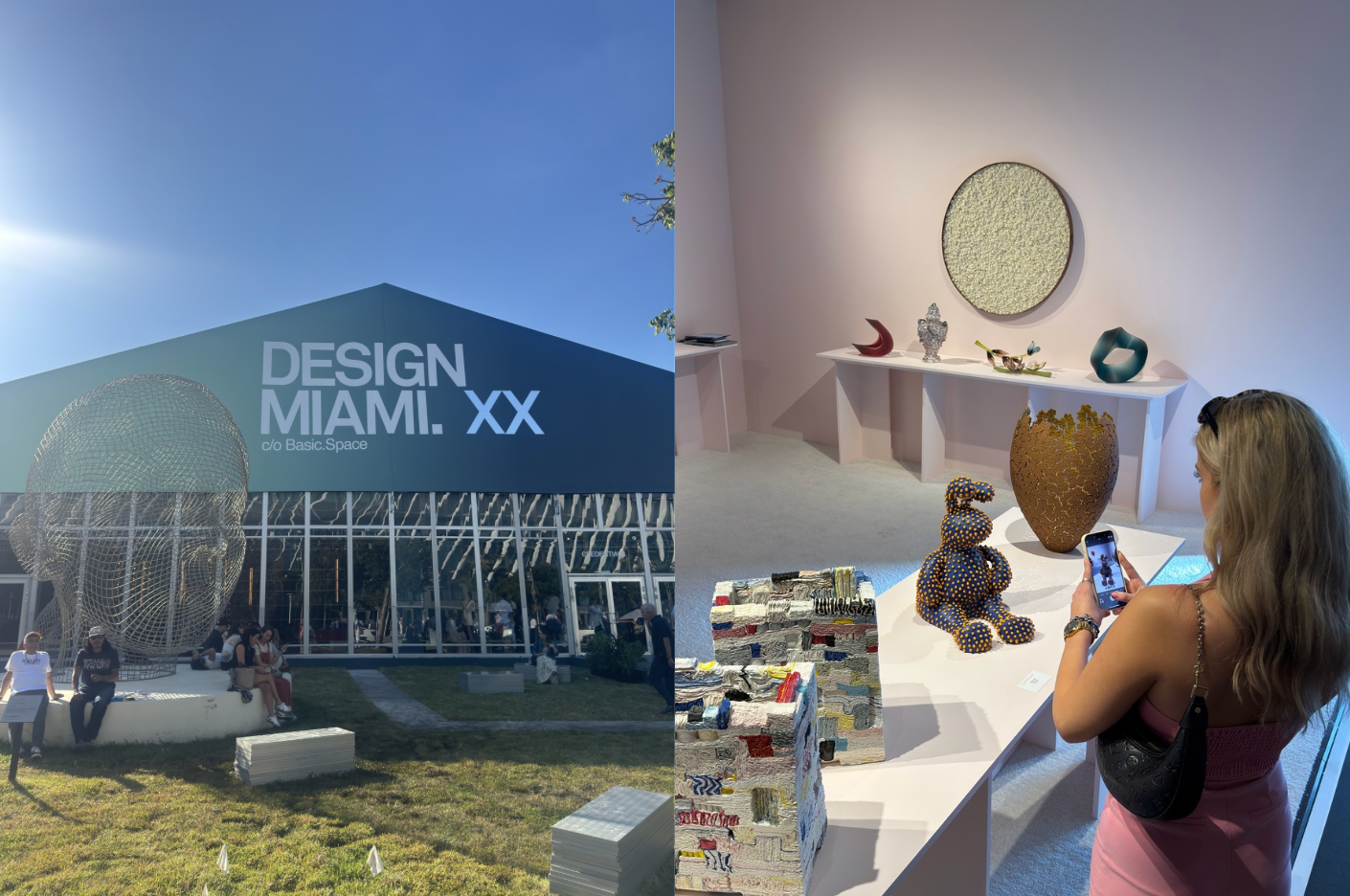
Luxury real estate does not evolve in isolation. It responds, often quietly, to broader shifts in how people live, work, collect, and express identity. Design Miami, while technically a design fair, functions as an early indicator of those shifts. What appears there often shows up in high-end residential architecture and interiors several years later.
Walking through this year’s fair, what stood out was not any single object or trend, but a consistent philosophy across exhibits: luxury has become more intentional, more personal, and more spatially disciplined. These changes have direct implications for how homes are being designed, marketed, and valued, particularly in markets like West Vancouver, where buyers are already deeply design-aware.
This article explores what Design Miami reveals about the future of luxury living and how those insights translate directly into West Vancouver’s real estate landscape.
From Objects to Environments: The Shift Toward Experiential Space
One of the most quietly compelling moments at Design Miami was the Range Rover booth, which presented the brand’s new vehicle, and perfume not as a product launch, but as an immersive spatial experience. The environment was minimal and architectural, dark reflective surfaces, controlled lighting, and carefully edited furnishings. By translating scent into space, Range Rover reinforced a broader shift in luxury branding: value is no longer communicated through excess, but through atmosphere, restraint, and emotional resonance. The approach felt strikingly similar to how the most successful luxury homes are now conceived, where lighting, materials, acoustics, and even scent work together to create a feeling rather than simply display features. It was a reminder that at the highest level, whether in automotive design, fragrance, or real estate, luxury is ultimately about how a space makes you feel the moment you enter it.
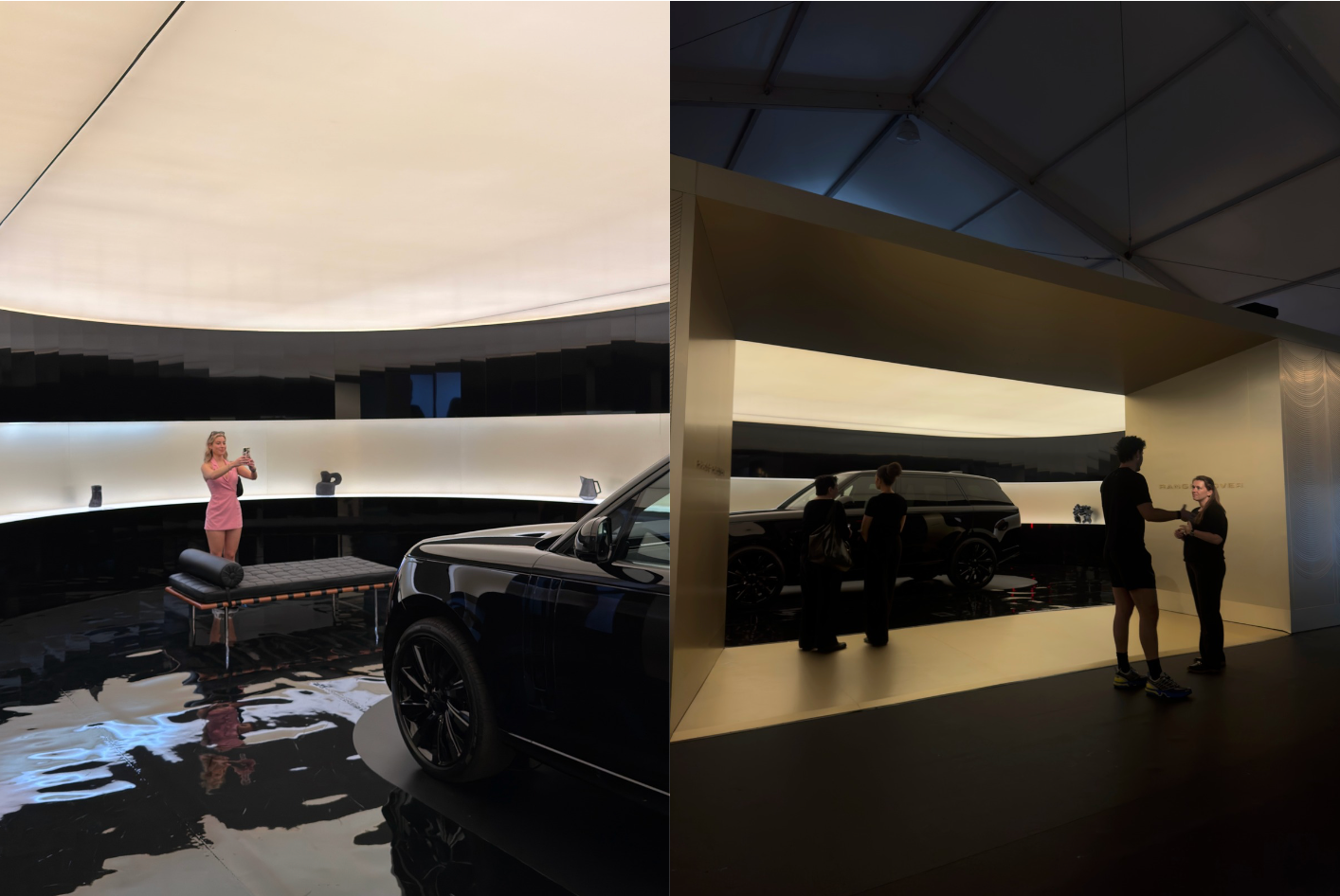
This approach mirrors a growing trend in luxury residential architecture: homes designed as sequences of experiences rather than collections of rooms.
In West Vancouver, this is increasingly visible in newer builds and high-end renovations:
● Entryways that deliberately slow the transition from exterior to interior
● Living spaces oriented around one strong architectural or design anchor
● Sightline's that frame views, art, or furniture rather than exposing everything at once
Buyers at this level are no longer impressed by openness alone. They are looking for homes that feel composed, where movement through the space has been considered as carefully as the finishes themselves.
Furniture as Structure, Not Decoration
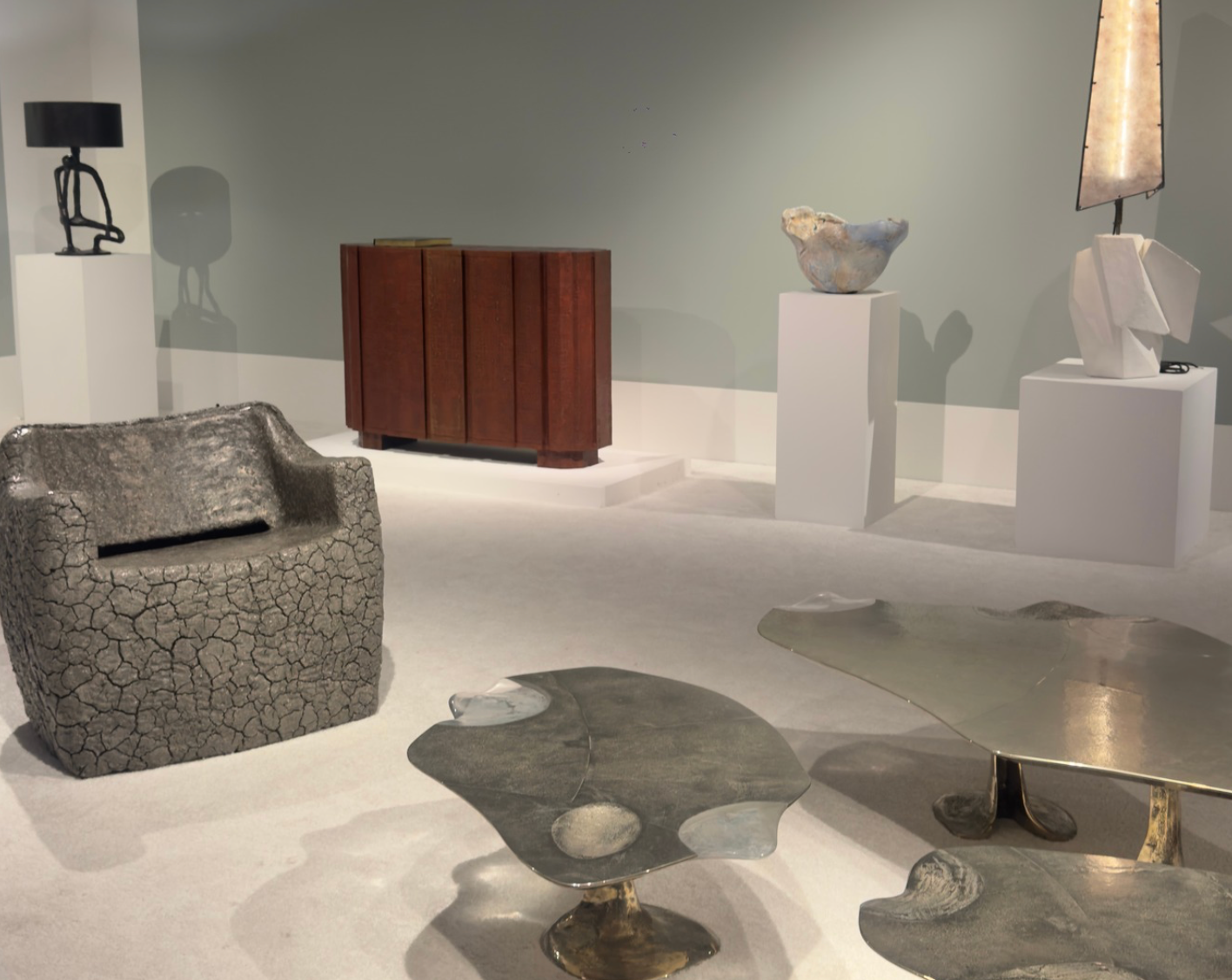
Across multiple exhibits, furniture pieces were treated less like accessories and more like structural elements. Chrome chairs shaped as oversized letters, stone seating with cracked surfaces, and low-profi le metal tables with irregular edges were not meant to blend in. They were intended to define the space around them. This is directly relevant to how luxury homes are being staged and lived in today.
In West Vancouver, buyers increasingly expect:
● Rooms designed around one or two substantial pieces
● Fewer furnishings overall, but higher quality and stronger presence
● Spaces that feel intentional even when sparsely furnished
Large, undefined rooms filled with generic furniture now feel under-considered. By contrast, a living area anchored by a sculptural sofa, a custom dining table, or a substantial art piece reads as confi dent and deliberate. That confi dence translates into perceived value.
Personalization and Identity as a Luxury Signal
The mirrored letter chairs on display at Design Miami were visually striking, but their significance went beyond form. They represented a broader movement toward identity-driven design.
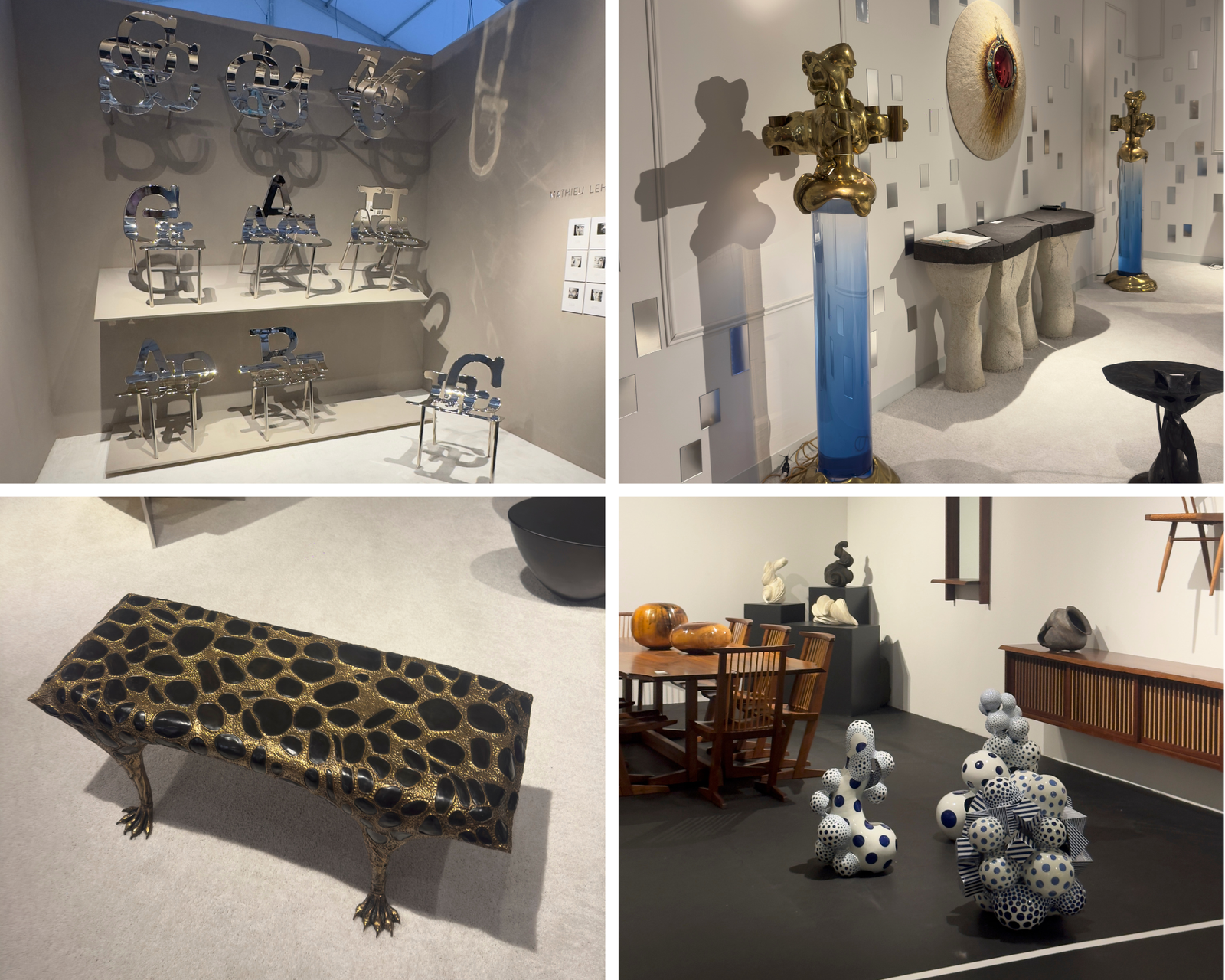
In the current luxury market, personalization has replaced excess as a primary status signal. Buyers are less interested in homes that look expensive and more interested in homes that feel specific.
In West Vancouver, this is refl ected in demand for:
● Custom millwork and built-ins
● Personalized libraries, studies, and dressing rooms
● Bespoke wine storage, wellness spaces, and home offices
The Return of Color, Used with Restraint
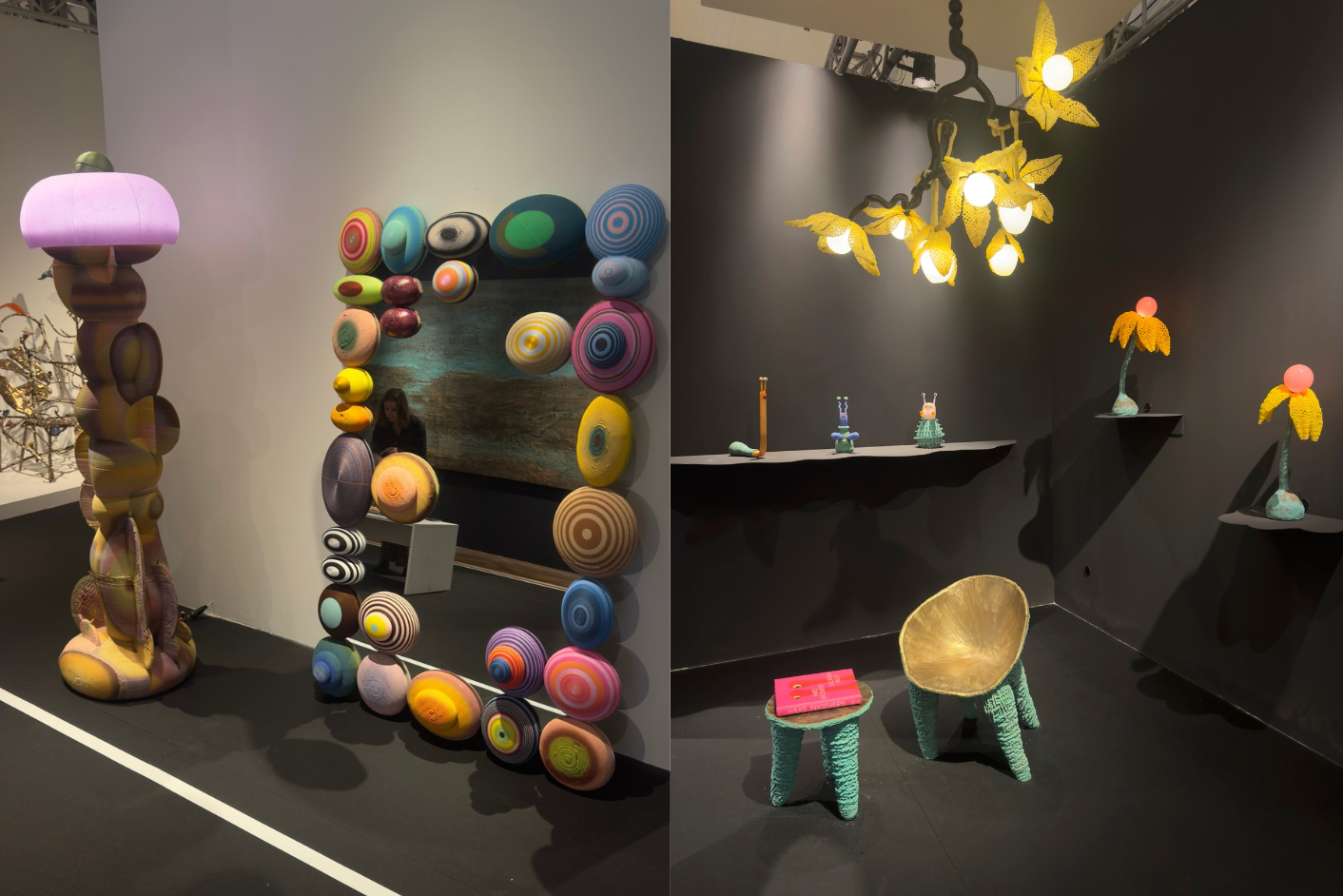
Several installations incorporated bold color, but always within a controlled architectural framework. One notable piece featured a mirror framed by rounded, vividly colored sculptural forms. Nearby, a tall lamp composed of stacked organic shapes introduced warmth and playfulness without overwhelming the space.
The key lesson was not that colour is “back,” but that colour now requires discipline.
In high-end residential design, particularly in West Vancouver:
● Neutral architecture remains the foundation
● Color appears in isolated, intentional moments
● Expressive elements are balanced by calm surroundings
Buyers respond well to homes that feel composed and flexible. A restrained palette allows them to imagine layering in their own collections, art, or furniture over time.
Texture Over Perfection: A Material Shift
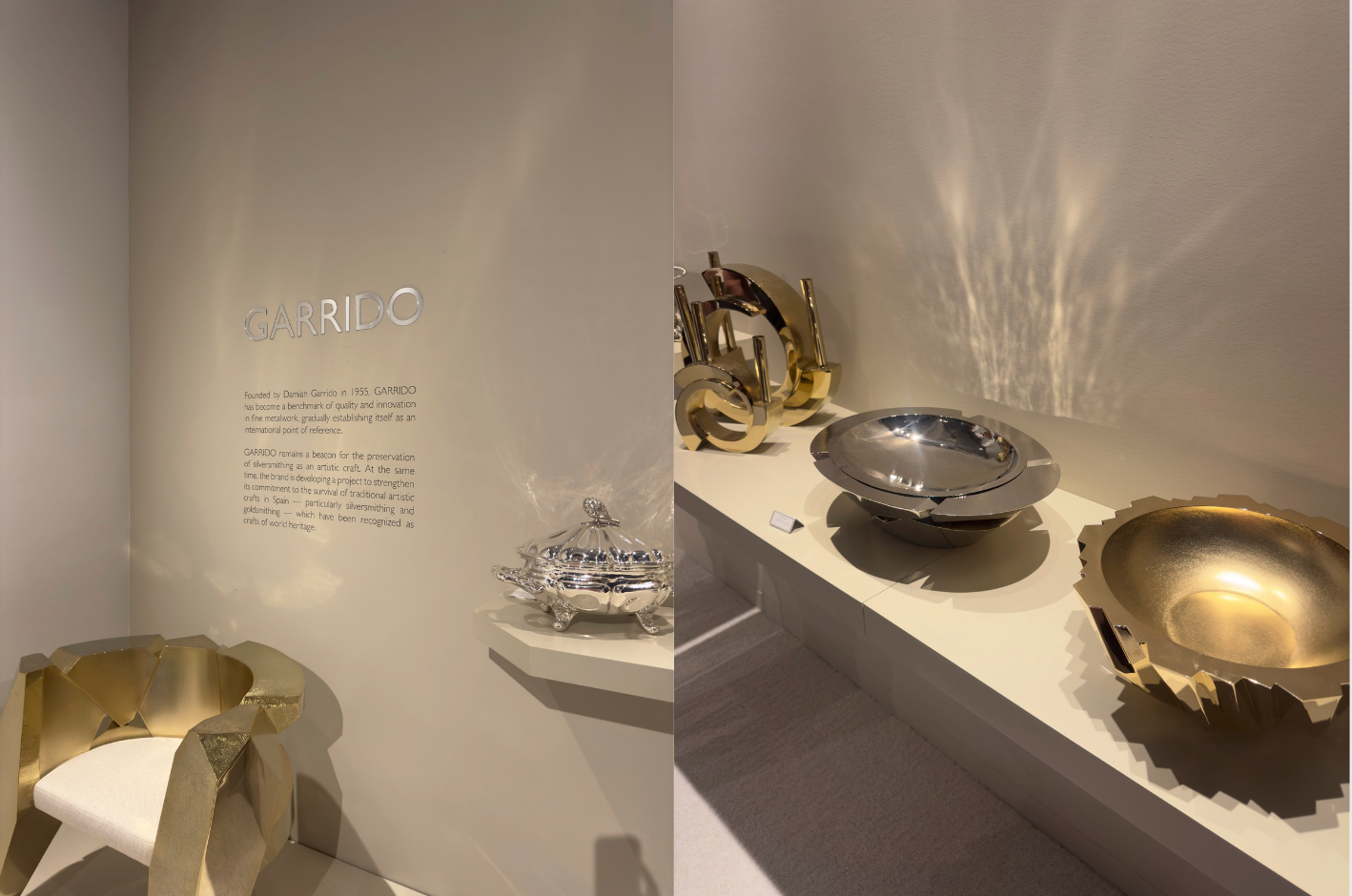
Perhaps the most consistent theme throughout the exhibition was the emphasis on texture and material honesty. Cracked stone chairs, raw-edged metal tables, and ceramic pieces with visible handwork dominated many of the spaces. This signals a meaningful shift in how luxury is defined.
High-end buyers are increasingly drawn to materials that:
● Show variation rather than uniformity
● Age gracefully rather than remain pristine
● Feel tactile and grounded
In West Vancouver homes, this shows up in the growing popularity of:
● Plaster and limewash walls
● Natural stone with visible veining
● Hand-finished wood flooring and cabinetry
These materials convey craftsmanship and permanence, qualities that resonate strongly with buyers investing at the top end of the market.
Softer Geometry and Human Centred Design
Curved forms appeared repeatedly across exhibits: rounded tables, soft-edged seating, organic silhouettes.
In residential architecture, especially in West Vancouver’s newer custom homes, this translates into:
● Arched doorways and softened transitions
● Curved walls and staircases
● Furniture layouts that prioritize comfort and flow
Luxury is increasingly associated with how a space feels to inhabit, not just how it looks in photographs.
The Home as a Curated Gallery
Every installation at Design Miami respected space. Objects were given room to breathe. The lighting was precise and purposeful. Negative space was treated as an asset rather than an absence. This gallery mindset is reshaping luxury residential design.
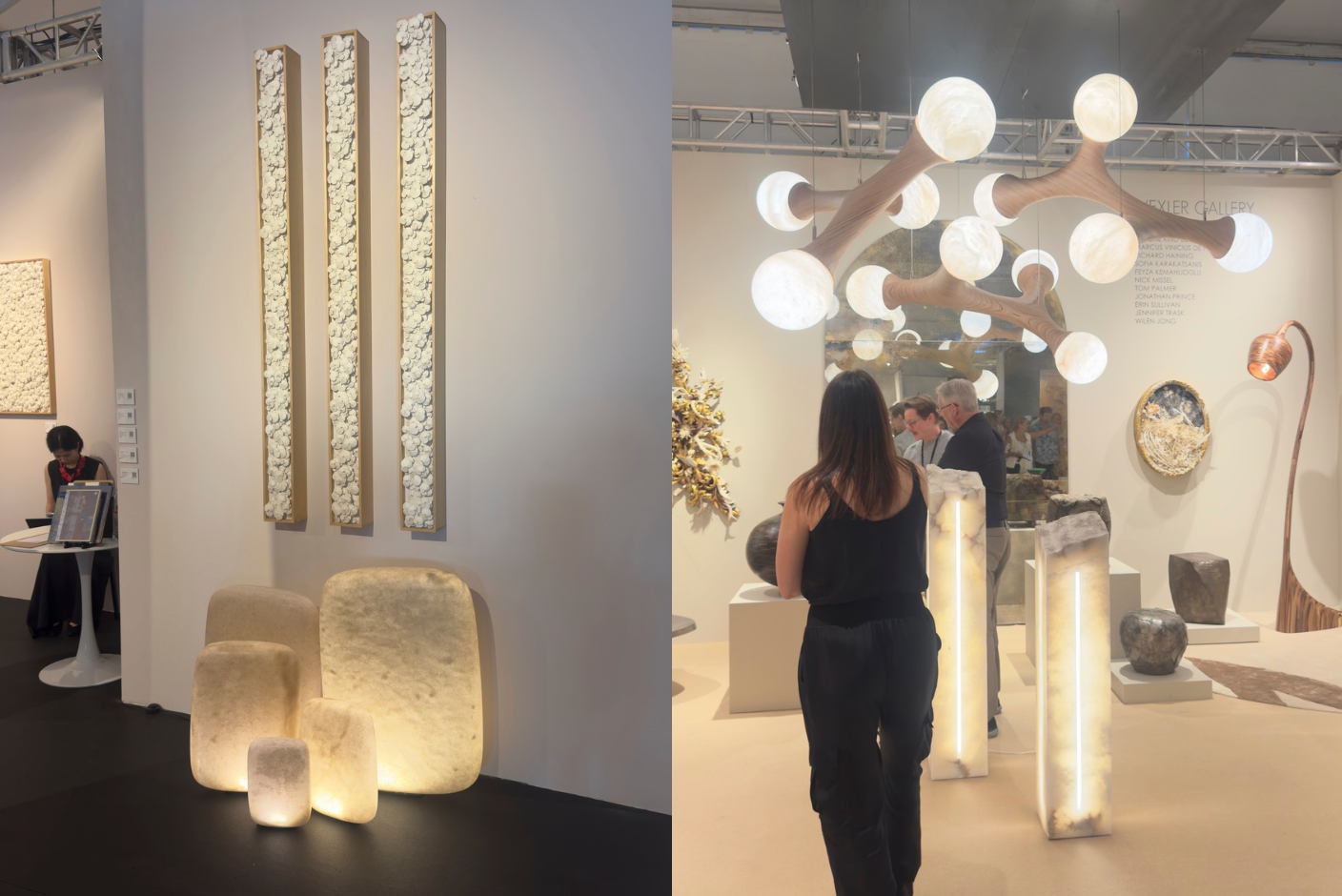
Homes designed with this philosophy:
● Feature intentional lighting plans
● Avoid visual clutter
● Allow art and furniture to stand on their own
In West Vancouver, properties that adopt this approach tend to photograph better, feel calmer, and appeal to buyers who are accustomed to collecting art, design, or both. These homes often command stronger interest because they feel considered rather than overproduced.
Implications for West Vancouver Real Estate
West Vancouver occupies a unique position in the luxury market. Buyers are not only affluent but also globally influenced. Many have lived in or spent significant time in design-forward cities and expect a comparable level of sophistication at home.

Design Miami reinforces several trends that are already shaping buyer expectations locally:
● Homes must feel intentional, not oversized
● Materials matter as much as square footage
● Personalization and flexibility are highly valued
For sellers, this means presentation and design strategy are no longer optional. For buyers, it means looking beyond surface finishes to understand how a home will support their lifestyle long-term.
A More Informed Definition of Luxury
What Design Miami ultimately illustrates is a more mature understanding of luxury, one that prioritizes:
● Thoughtful spatial planning
● Material integrity
● Emotional comfort
● Personal expression
This aligns closely with where West Vancouver’s market is heading. The most desired homes are those that balance architectural restraint with meaningful design moments.
Closing Perspective
Design Miami is not about replicating what is seen on the exhibition floor. It is about understanding the values driving those designs and recognizing how they will shape residential environments in the years ahead.
For West Vancouver real estate, the message is clear: the future of luxury is intentional, personal, and deeply considered.
Homes that reflect these principles will not only stand out, they will endure.