
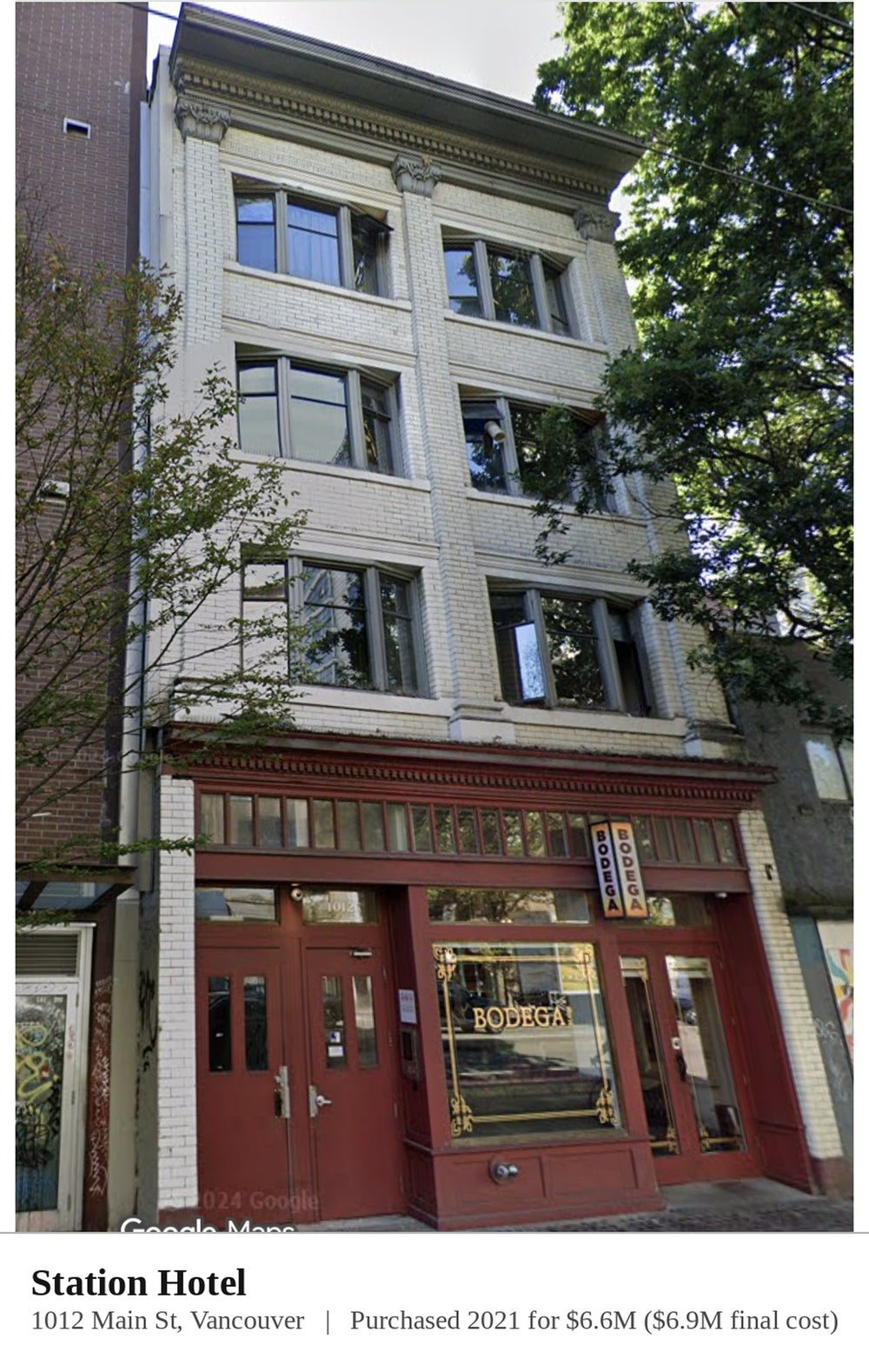
Between 2020 and 2021, BC Housing allocated $202.4 million to acquire nine hotel properties across British Columbia to provide temporary shelter for individuals experiencing homelessness. Five Vancouver properties accounted for $150 million to $153 million of that expenditure. Among these, the former Howard Johnson Hotel involved a total expenditure of $56.6 million, including acquisition and initial conversion costs. Over six years of operation, the facility experienced significant operational demands, including nearly 4,000 police calls, 900 fire department responses, and repeated water ingress issues affecting a ground-floor commercial tenant.
In response to operational challenges and feedback from local businesses, the province initiated plans to close the facility. In July 2026, BC Housing launched a non-binding Expression of Interest (EOI) process to explore disposition options for the building, including sale or lease options. Governed by a standard non-disclosure agreement, the submission window closed on August 21, 2026, with details regarding prospective operators or transaction terms remaining confidential as evaluation continues.
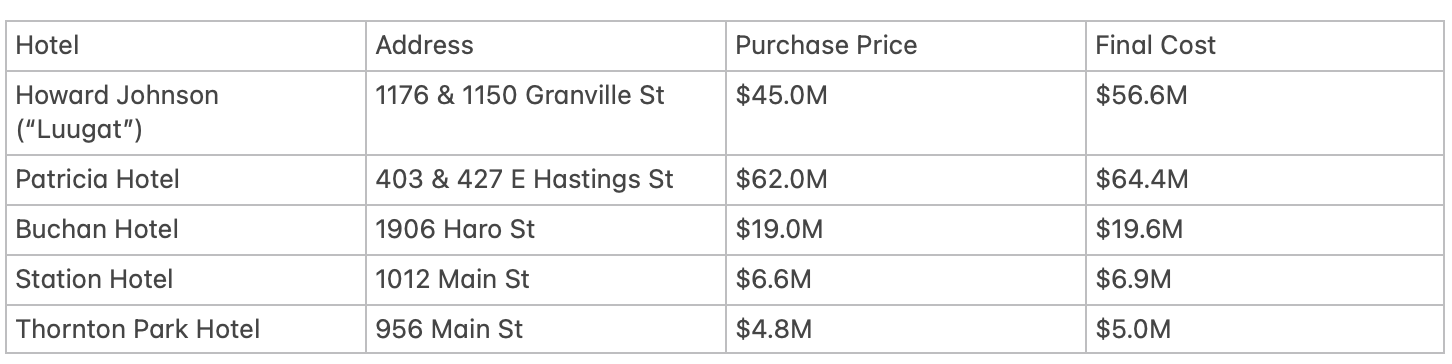
The $150 million to $153 million allocated to five Vancouver hotels highlights significant gaps between standard market valuations and the province’s execution of these emergency acquisitions.
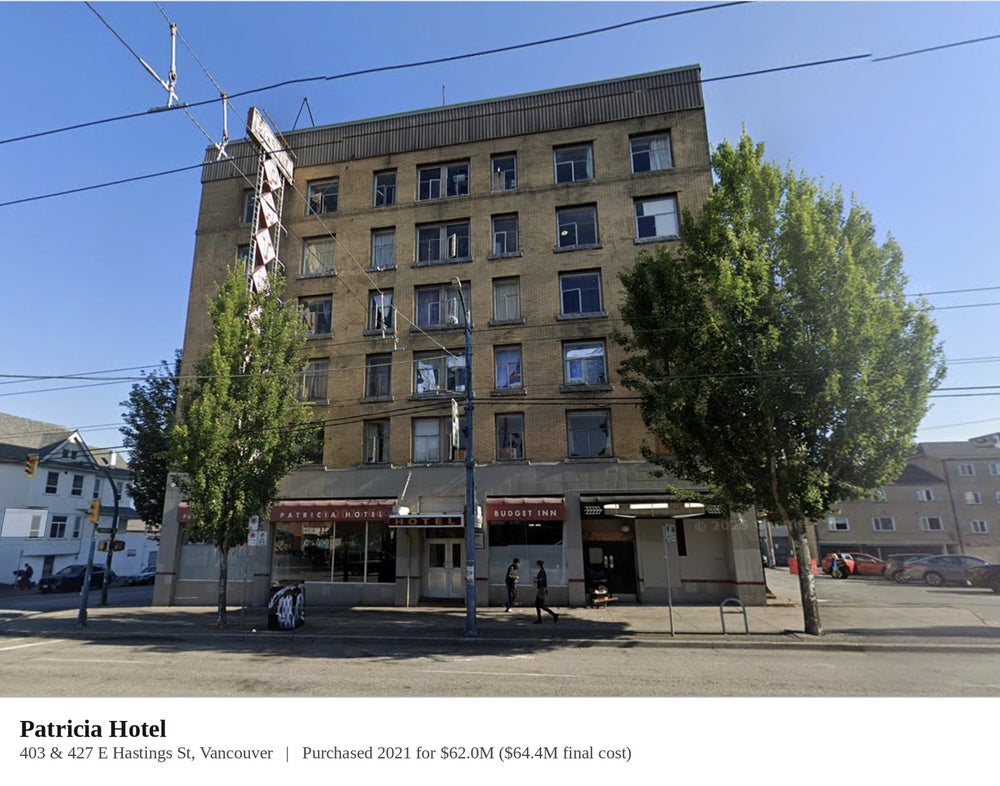
Substantial Valuation Premiums: The acquisition of the Patricia Hotel demonstrates the disconnect between BC Assessment values and provincial spending. Assessed at $14.2 million prior to sale, the property was purchased by the province for $62 million—more than four times its assessed valuation, representing a $47.8 million premium paid out of public funds.
Internal Reliance on Appraisals: To justify the $202.4 million total portfolio expenditure, the province pointed to independent appraisals totaling $220 million. However, the Auditor General’s review revealed structural limitations in how those figures were generated and utilized.
Key Systemic Vulnerabilities in the Acquisition Process
1. Bypassing Independent Financial Scrutiny: Because these purchases were executed as all-cash transactions, BC Housing commissioned and received the appraisals directly. Bypassing commercial lenders eliminated the mandatory third-party underwriting and rigorous appraisal validation typically required in private real estate transactions.
2. Opaque Valuation Timing: Administrative guidelines required only that an appraisal date fall within 12 months of a purchase agreement. The Auditor General’s findings noted that the record does not clarify whether these appraisals were finalized prior to price negotiations or completed after purchase amounts were already established.
3. Restricted Audit Oversight: While the Auditor General confirmed technical adherence to existing BC Housing policy, the audit explicitly omitted any review of appraiser independence or the underlying valuation methodologies used to justify the purchase prices.
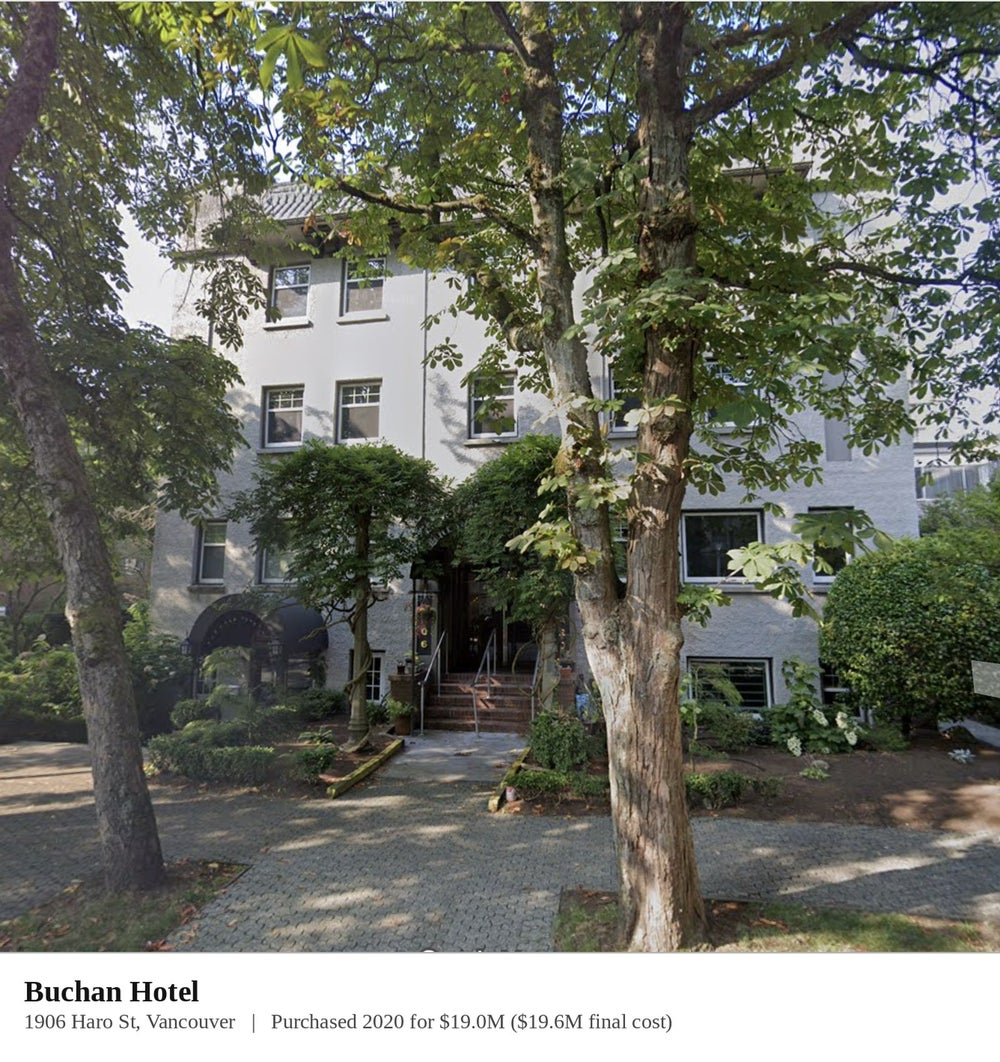
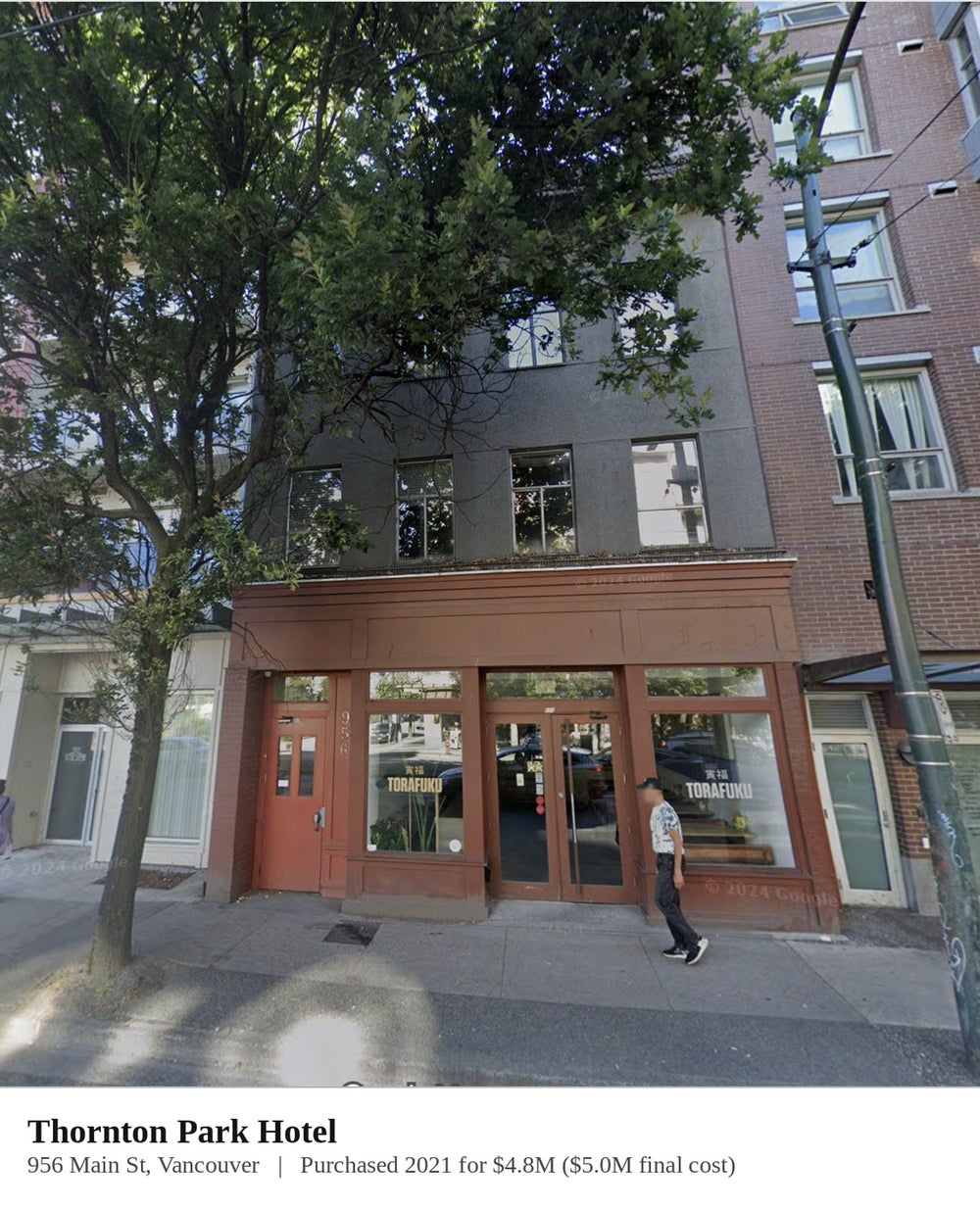
Beyond initial purchase costs, the operational history of these properties underscores significant ongoing strain on local municipal resources, surrounding commercial operators, and public safety infrastructure.
Severe Strain on First Responders: Since the province acquired the former Howard Johnson Hotel (operating as the Luugat) in mid-2020, the site has logged nearly 4,000 police incidents and approximately 900 fire department calls. The Patricia Hotel was separately the location of a fatal police shooting in 2022.
Infrastructure Deterioration and Commercial Damage: The Granville Street property has suffered extensive structural and plumbing issues. A ground-floor nightclub tenant reported over 200 separate flooding incidents—failures attributed by the site operator to burst piping and extreme hoarding conditions within residential units.
Community Pressure and Closure Delay: Following years of sustained concern from neighbouring business owners regarding property damage and public safety, BC Housing announced in November 2025 that it would decommission the building by June 2026 and relocate its approximately 110 residents.
The Opaque Transition to Disposition
Despite announcing the closure in late 2025, provincial authorities offered little clarity regarding the property's ultimate disposition for over half a year:
1. Prolonged Lack of Clarity: Throughout 2025 and early 2026, BC Housing withheld details regarding whether 1176 Granville Street would be sold, leased, or redeveloped, leaving nearby businesses and taxpayers uninformed about the property's future.
2. Delayed EOI Launch: It was not until July 24, 2026—weeks past the original targeted closure date , that BC Housing issued a formal Expression of Interest (EOI) seeking submissions to purchase or lease the facility.
3. Implicit Confirmation: While the initial EOI documents omitted the building's street address, the property profile, a six-year supportive housing hotel featuring two ground-floor commercial retail units acquired in 2020, matched the Howard Johnson/Luugat asset.
A Three-Stage Process Bound by Secrecy
1. Mandatory Secrecy as a Gatekeeper (The Non-Disclosure Agreement): BC Housing barred prospective participants from accessing basic, substantive property records without first executing a strict non-disclosure agreement (Appendix E). Critical operational data—including site specifications, service requirements, and operating expectations (Appendices B and D)—was completely withheld until the NDA was signed. Prior to executing the agreement, the public and prospective buyers had access only to cover documents and blank forms. Furthermore, the NDA imposes a restrictive five-year confidentiality obligation, with trade secret clauses extending indefinitely.
2. Restricted Access to Site Data: Only after signing away their right to disclose property information did interested parties receive the site package containing operational parameters and building requirements.
3. Closed Submission Framework: Applicants were required to submit commercial property management histories and formal responses via private email channels prior to the August 21, 2026 deadline. With that window now closed, no details regarding applicant volume, financial terms, or proposed usages have been shared publicly.
By mandating legal non-disclosure simply to review property specifics, BC Housing created a closed-door disposition process that keeps prospective outcomes, transaction terms, and asset conditions hidden from the public paying for them.
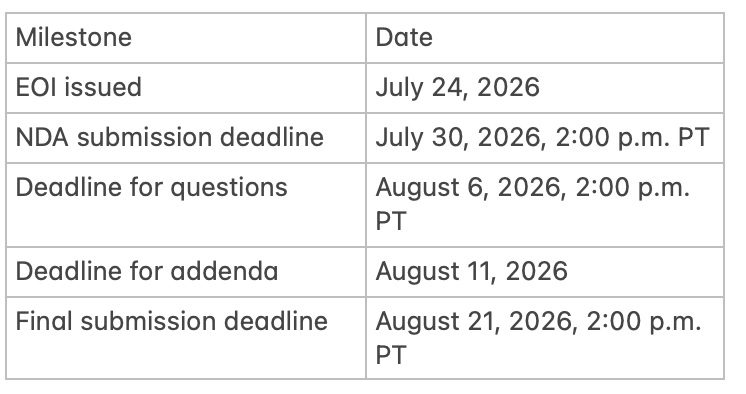
The fine print of BC Housing’s Expression of Interest (EOI) framework further isolates the disposition of 1176 Granville Street from public oversight and standard competitive expectations. While framed as a preliminary market-sounding exercise, the process grants the agency absolute discretion over how—or if—the property is transferred, while eliminating traditional protections for both taxpayers and prospective buyers.
Key Procedural Exemptions and Accountability Gaps
1. Absence of Competitive Bidding Obligations ("Contract A"): The EOI explicitly states that it is not a binding "Contract A" bidding process. In public procurement, "Contract A" is the legal mechanism that mandates fairness, equal treatment of participants, and objective evaluation standards. By opting out of this standard framework, BC Housing avoids any legal obligation to conduct an open, competitive selection process, leaving unsuccessful participants with no recourse to challenge the outcome.
2. Unilateral Authority to Bypass the Process: Under Section 2.2 of the EOI, BC Housing reserves the right to negotiate directly with parties that never submitted a response, contact only a selected sub-group, launch an entirely separate solicitation, or choose not to sell or lease the asset at all. Consequently, the public has no assurance that the property will be awarded through a transparent market evaluation, or that the eventual operator will have participated in the public EOI.
3. Non-Binding Pricing and Undisclosed Terms: Any financial terms or valuation estimates provided during this stage are categorized as "for general information purposes only." Any binding financial agreement reached down the road will occur in subsequent, private negotiations that the EOI framework does not require to be made public.
The financial challenges associated with BC Housing’s hotel portfolio coincide with a broader deterioration in British Columbia’s fiscal standing. With the province projecting a $13.3 billion deficit for 2026–27 and annual shortfalls expected to remain near $11 billion through the end of the decade, public policy has shifted toward expanding revenue generation and altering long-standing tax programs.
Broad-Based Tax Expansion
To offset expanding structural deficits, several new and increased tax measures take effect across the province:
Personal Income Tax Increase: The lowest income tax bracket rises from 5.06% to 5.60%, increasing income tax obligations for average British Columbians.
Additional School Tax Surtax: Effective January 1, 2027, the Additional School Tax on residential properties valued over $3 million increases significantly. The tax rate rises from 0.2% to 0.3% on the portion of assessed value between $3 million and $4 million, and from 0.4% to 0.6% on the portion exceeding $4 million.
For property owners in communities such as West Vancouver, Kerrisdale, Point Grey, and Shaughnessy, this adjustment represents a substantial added carrying cost.
Speculation and Vacancy Tax Adjustments: The rate for foreign owners and untaxed worldwide earners increases from 3% to 4% in 2027, accompanied by a $250 non-refundable penalty for missed annual declaration deadlines starting January 1, 2027.
Structural Shift in the Property Tax Deferment Program
Alongside direct tax rate adjustments, the province revised the terms of the Property Tax Deferment Program, a long-standing tool used by seniors aged 55 and older, individuals with disabilities, and families with children to manage annual property tax burdens against their home equity.
Pre-2026 Terms: Deferred balances accrued simple interest at prime minus 2% (equating to 2.45% simple interest at a 4.45% prime rate). Under simple interest rules, a deferred balance took approximately 28 years to double.
Revised Terms (2026 Forward): Taxes deferred for the 2026 tax year and onward accrue interest at prime plus 2% (6.45% at a 4.45% prime rate), compounded monthly. Under monthly compounding at this rate, the deferred balance doubles in approximately 11 years.
Impact on Homeowner Equity: While the Office of the Seniors Advocate notes that the program remains a functional mechanism for low-income seniors to remain in their homes, seniors’ advocacy groups have pointed out that compound interest significantly accelerates equity erosion over time compared to previous terms. (Balances deferred prior to 2026 retain the original prime-minus-2% simple interest structure.)
The following illustrates the effect using a hypothetical senior deferring $10,000 annually, holding today’s prime rate (4.45%) constant across both formulas and both time horizons. Actual prime rates will fluctuate over such periods; holding the rate constant isolates the effect of the formula change itself.

The material impact on long-term participants in the Property Tax Deferment Program is best reflected in the ratio of total accrued debt to the original tax deferred.
Shift in Debt Ratio: Under the pre-2026 program, after 20 years of deferrals, total accumulated debt equaled roughly 126% of the principal tax deferred, representing the original tax plus a modest simple interest component.
Under the Revised Terms: Over the same 20-year timeline, total owed rises to approximately 210% of the principal deferred. At 6.45% compounded monthly, interest alone exceeds the total underlying tax obligation, causing accrued interest to consume a significantly larger share of home equity.
Connecting Local Property Taxes to Provincial Expenditures
It is fair to ask how the financial record of a Granville Street hotel connects to a residential property tax notice in West Vancouver or across Metro Vancouver. The connection lies directly within the province’s Consolidated Revenue Fund.
To illustrate the mechanics for a sample West Vancouver home assessed at $6 million:
1. Exemption Threshold: The first $3 million of assessed value remains exempt from the Additional School Tax.
2. 2026 Tax Rates: The next $1 million (value between $3M and $4M) is taxed at 0.2% ($2,000), and the remaining $2 million (above $4M) is taxed at 0.4% ($8,000), resulting in an annual tax of $10,000.
3. 2027 Tax Rates (50% Increase): With the rate increases effective January 1, 2027, the same home pays 0.3% on the $3M–$4M band ($3,000) and 0.6% on the remaining balance ($12,000), increasing the tax bill to $15,000. This represents a $5,000 annual increase on an unchanged assessment.
Allocation of Revenue: Core Government Operations vs. Capital Spending. While labeled as a "school tax," municipal documentation clarifies how these funds are distributed:
General Revenue Destination: As outlined by local municipalities, revenues from the provincial school tax are remitted directly to the Province’s Consolidated Revenue Fund. They are not retained locally by municipal councils or routed directly to individual school district operational budgets, but rather support core provincial government expenditures, including healthcare, justice, post-secondary education, and debt servicing.
Capital Funding Distinction: School construction, expansions, and seismic retrofits are funded separately through the province's three-year capital spending plan. Under Budget 2026, taxpayer-supported capital allocations include $13.8 billion for transit and transportation infrastructure, $11.1 billion for healthcare facilities, and $3.9 billion for seismic upgrading of existing schools.
Consequently, higher tax contributions in 2027 flow into general revenue, the same central fund that absorbed the initial $202.4 million hotel acquisition outlay and will absorb any net loss realized upon the eventual disposition of 1176 Granville Street.
Summary of the Documented Record
This analysis does not allege unlawful conduct; it documents a measurable gap between public capital outlays, property management outcomes, expanding tax measures, and the level of public transparency required regarding asset disposal.
2020 Acquisition: $56.6 million in total public funds allocated to acquire and convert a single Granville Street property, based on an internal appraisal. Operational Record: Nearly 4,000 police calls, 900 fire responses, and repeated commercial flooding over a six-year period. Fiscal Environment: A $13.3 billion annual deficit, expanding PST bases, higher personal income tax rates, elevated additional school tax rates, and restructured tax deferral interest formulas.
Disposition Transparency: A closed-door EOI framework bound by non-disclosure agreements that does not obligate the disclosure of final sale prices or operational outcomes.
References
Audit & Official Government Reports
* Office of the Auditor General of British Columbia, COVID-19 Response: Property Purchases, March 2022.
* BC Housing, Expression of Interest #1070-2627-091: Lease or Purchase a Hotel Property, Vancouver, BC, issued July 24, 2026.
* BC Housing, Appendix E: Non-Disclosure Agreement, EOI 1070-2627-091, July 2026.
* Province of British Columbia, Province purchases properties in Vancouver to provide more affordable housing, June 2020.
* Province of British Columbia, Interest and fees for property tax deferment, 2026.
* Province of British Columbia, Additional school tax rate, updated April 17, 2026.
* Province of British Columbia, B.C. Provincial budget tax changes, Budget 2026.
* Office of the Seniors Advocate of British Columbia, Update on B.C.’s Property Tax Deferment Program, 2026.
Municipal & Local Government Statements
* District of West Vancouver, School Tax, accessed August 2026.
* Union of BC Municipalities, Provincial budget pulls back on housing, increases deficit and debt, February 17, 2026.
News & Media Coverage
* Global News, Urban planner says B.C. government will lose millions on purchase of notorious Granville SRO, August 19, 2026.
* Global News, ‘Incredibly long road’: Granville Howard Johnson supportive housing to close next June, November 2025.
* Global News, ‘Slum landlord’: Granville bar flood exposes conditions inside BC Housing SRO.
* Global News, Club owners want compensation for repeated damage from Vancouver social housing.
* The Globe and Mail, B.C. seniors’ advocates push back on overhaul of property tax deferment program.
* CBC News, B.C. Housing followed rules in buying 9 hotels, auditor general report finds, March 2022.
* CBC News, Man dead after police-involved shooting at hotel in Vancouver’s Downtown Eastside, 2022.
* The Tyee, Auditor General Finds No Fault with BC’s Hotel-Buying Spree, March 2022.
* Business in Vancouver, B.C. pays 4.5 times assessed value for Downtown Eastside’s Patricia Hotel.
* Western Investor, B.C. defends $63.8M price for Patricia Hotel.
* Daily Hive, BC government buys two Vancouver hotels to help house homeless, 2020.
* Daily Hive, ‘Granville Street is in full crisis’: pleas to shut down unsafe SROs.
* Daily Hive, B.C.’s PST will be expanded in 2026, especially for real estate.
* Resource Works, Rising deficits and new taxes define the latest B.C. government spending plan.
Financial & Market References
* WOWA, Canada Prime Rate, accessed August 2026.